
The Literary History of Montréal
- Holly Rhiannon
- Nov 21, 2025
- 4 min read

A City Built on Words
Montréal is a city of contrasts. Stone churches cast shadows over modern galleries. The voices of poets echo in both French and English. From the storied streets of Mile End to the quiet study halls of McGill, Montréal’s literary history is as complex and compelling as the city itself.
While in some cities literature may appear as a footnote to its culture, things are different in Montréal. Instead, it is one of its cornerstones. Writers here have used fiction, poetry, and essays not just to tell stories, but to wrestle with identity, politics, language, and longing.
Leonard Cohen: A Poet in the City
Leonard Cohen may be known globally as a musician, but he was first shaped by the written word. Born into a middle-class Jewish family in Westmount in 1934, Cohen attended McGill University, where he studied literature and began publishing poetry. His first collection, Let Us Compare Mythologies, was released in 1956 to quiet but respectful attention.
For Cohen, Montréal was a spiritual and intellectual wellspring. He often wandered the streets of the Plateau and the Main, observing, writing, and absorbing. In cafes along Saint-Laurent, he drafted verses that blurred the sacred and the profane. Later, his novels The Favourite Game and Beautiful Losers would push the boundaries of form, structure, and subject, capturing something uniquely Montréal in tone—romantic, philosophical, and strange.
Even at the height of his music career, Cohen returned to his roots here. Until his death in 2016, he kept a home in the city and was frequently spotted walking its streets. His Montréal was not idealised, but real, raw, and deeply human.
Mordecai Richler: Montréal's Ironist
Where Cohen whispered, Mordecai Richler barked. Also born in the 1930s, Richler grew up in the working-class Jewish neighbourhood now known as Mile End. His fiction tore into the fabric of Montréal society with irreverent humour and sharp political insight.
Richler's The Apprenticeship of Duddy Kravitz introduced readers to a brash, ambitious young man who will stop at nothing to get ahead. It was more than a coming-of-age story. It was a portrait of a community often overlooked, and a critique of the very city that shaped it. Richler didn't flinch from depicting tensions; between English and French, Jew and Gentile, ambition and morality.
His relationship with Quebec was fraught. Nationalists accused him of disrespecting the province, while others saw him as one of its most honest chroniclers. In many ways, he was both. Through books like St. Urbain’s Horseman and Barney’s Version, Richler gave Montréal a voice that was sardonic, world-weary, and unmistakably local.
Henri Tranquille and the Bookstore that Sparked a Revolution
Writers need booksellers, and Montréal had one of the most daring in Henri Tranquille. His shop, Librairie Tranquille, located on Ste-Catherine Street, was more than a place to buy books. It was a crucible for new ideas.
In 1948, Tranquille’s store was the launch site of Refus global, a manifesto written by Paul-Émile Borduas and signed by a group of artists and intellectuals known as Les Automatistes. It called for freedom from the rigid moral and religious codes of Quebec society, shocking the public and altering the province’s cultural course. Tranquille, by offering a space for such voices, positioned his bookstore as a haven for free expression.
He stocked surrealist texts, controversial manifestos, and avant-garde literature at a time when such works were often banned or condemned. His courage helped lay the groundwork for the Quiet Revolution of the 1960s, a period of massive social and cultural change in Quebec.
Interested in the spookier side of this story? Read Donovan King's blog about Esplanade Tranquille!
A Meeting Point of Language and Literature
What sets Montréal apart from many other literary cities is its multilingual and multicultural identity. French and English writers have lived side by side, sometimes in harmony, sometimes in tension. That tension has been fertile ground for literature.
Writers like Marie-Claire Blais, Nicole Brossard, and Dany Laferrière explored gender, identity, and exile through the lens of French-language literature, often in radical or experimental forms. Meanwhile, Anglophone writers such as Heather O’Neill and Rawi Hage have captured Montréal’s underbelly in gritty, luminous prose.
The city has also been home to countless literary journals and small presses that have helped emerging voices find their way. Publications like Liberté, The Montréal Review, and Yolk Literary have made room for the kind of writing that doesn’t chase trends but instead asks uncomfortable questions.
A Living, Breathing Literary Landscape
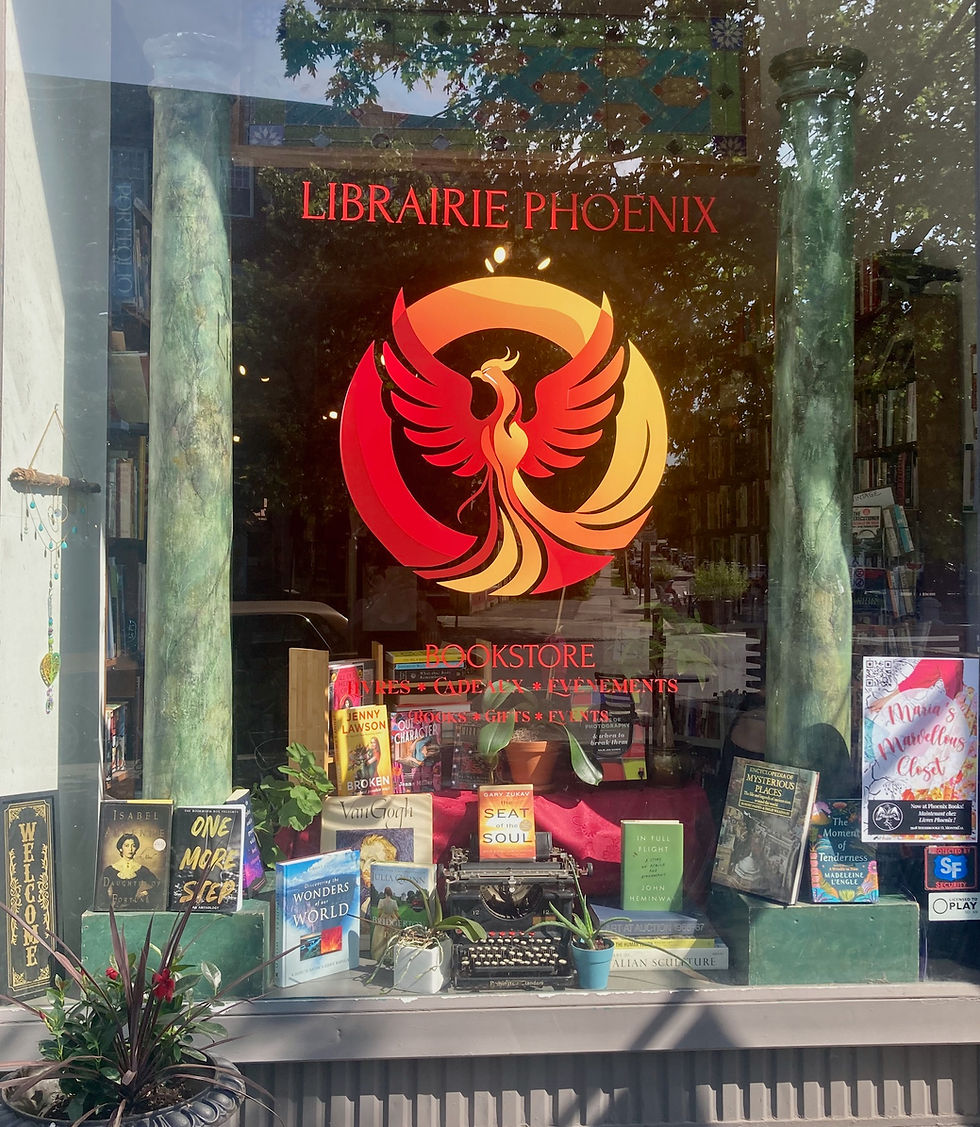
Walk through Montréal today and you can still feel this legacy. The windows of Argo Bookshop and Librairie Drawn & Quarterly display works by local authors. Spoken-word events unfold in dimly lit bars. Writers gather in parks with notebooks and wine.
The literary culture here is not locked away in institutions. It is alive in stairwells and subways, street murals and whispered references. There is something about Montréal that continues to call writers to the page. Perhaps it is the city’s refusal to be easily defined. Perhaps it is the long shadows cast by those who came before.
Carrying the Torch
At The Stygian Society, we are proud to call this city home. To publish books from Montréal is not only a pleasure, but a responsibility. We follow in the footsteps of those who built a literary world on ideas, courage, and a refusal to be silenced.
We are honoured to carry on this tradition in a city where literature still matters.
Sources:
I'm Your Man: The Life of Leonard Cohen by Sylvie Simmons
Mordecai: The Life & Times by Charles Foran
CBC Digital Archives: Refus global and Tranquille
Montréal and the Poetics of Modernity by Jean-Philippe Warren
The Canadian Encyclopedia
Bibliothèque et Archives nationales du Québec
Montréal Review of Books
Drawn & Quarterly history pages
Interviews and archival material from the Jewish Public Library of Montréal
*Miss your favourite Montréal author in this article? Let us know in the comments and we'll do a part two!


Comments